Part 1 of 2 · Learning programme

VuxLore Tick Academy® · Early Years learning

Little Explorers: Tick-Safe Habits

A calm, playful programme led aloud by a parent, carer or educator. Children meet a tick, practise a simple outdoor routine and learn when to tell a trusted grown-up.

  • Ages 3–5 · Adult-led · Early Years / Nursery / Preschool / Kindergarten
  • 25–40 minutes · Five short modules · Complete over several sessions
  • 5 required modules

Your name stays private. We don't save or send it anywhere. It is used only on this open page and disappears when you refresh or close it.

You can use a first name or nickname, skip this step, or ask a grown-up to help.

Your learning journey

Welcome

Today you are going to learn the essential tick-awareness knowledge and practical habits covered in this programme. Work through each learning module and its short activities in order.

When you complete the learning programme, you can take the separate final assessment. Reach the required pass mark and you can create and print your VuxLore Tick Academy certificate.

Why tick awareness matters

We learn this habit because a few ticks can carry germs that make people or animals poorly. Grown-ups may call one of these illnesses Lyme disease. Most tick bites do not cause illness. Young children only need to remember: enjoy outdoor play, Stop, Check, Tell, and let a trusted grown-up help.

Programme outcomes

  • Recognise a friendly enlarged tick picture
  • Know ticks crawl and may be outdoors or on animals
  • Join in with Stop, Check, Tell
  • Accept a kind, private grown-up check
  • Tell rather than touch or pull

Learning completion: Work through every module and use both supportive learning checks. These checks are not scored and do not contribute to the final assessment result. The separate assessment unlocks after the learning programme is complete.

Module 1 of 5 · 5–8 minutes

Meet a tiny tick
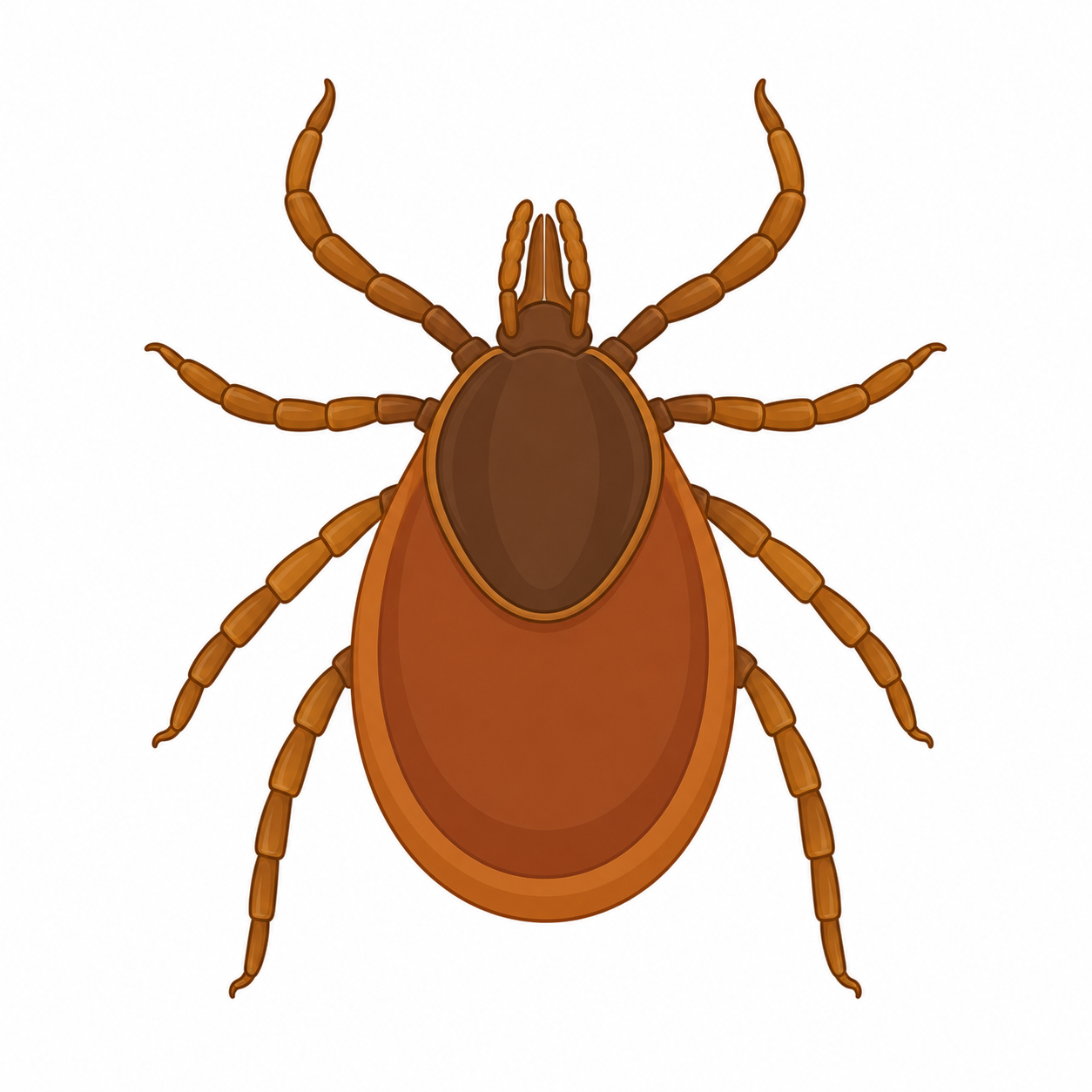
Friendly enlarged illustration of a tick with eight legs
A friendly enlarged illustration. Real ticks can be much smaller and vary in colour, shape and feeding state.
Simple enlarged illustration of a tick viewed from above with eight legs
Meet a tick. This simple illustration is enlarged so its body, mouthparts and eight legs are easier to see. Real ticks vary in size, colour, species and feeding state.
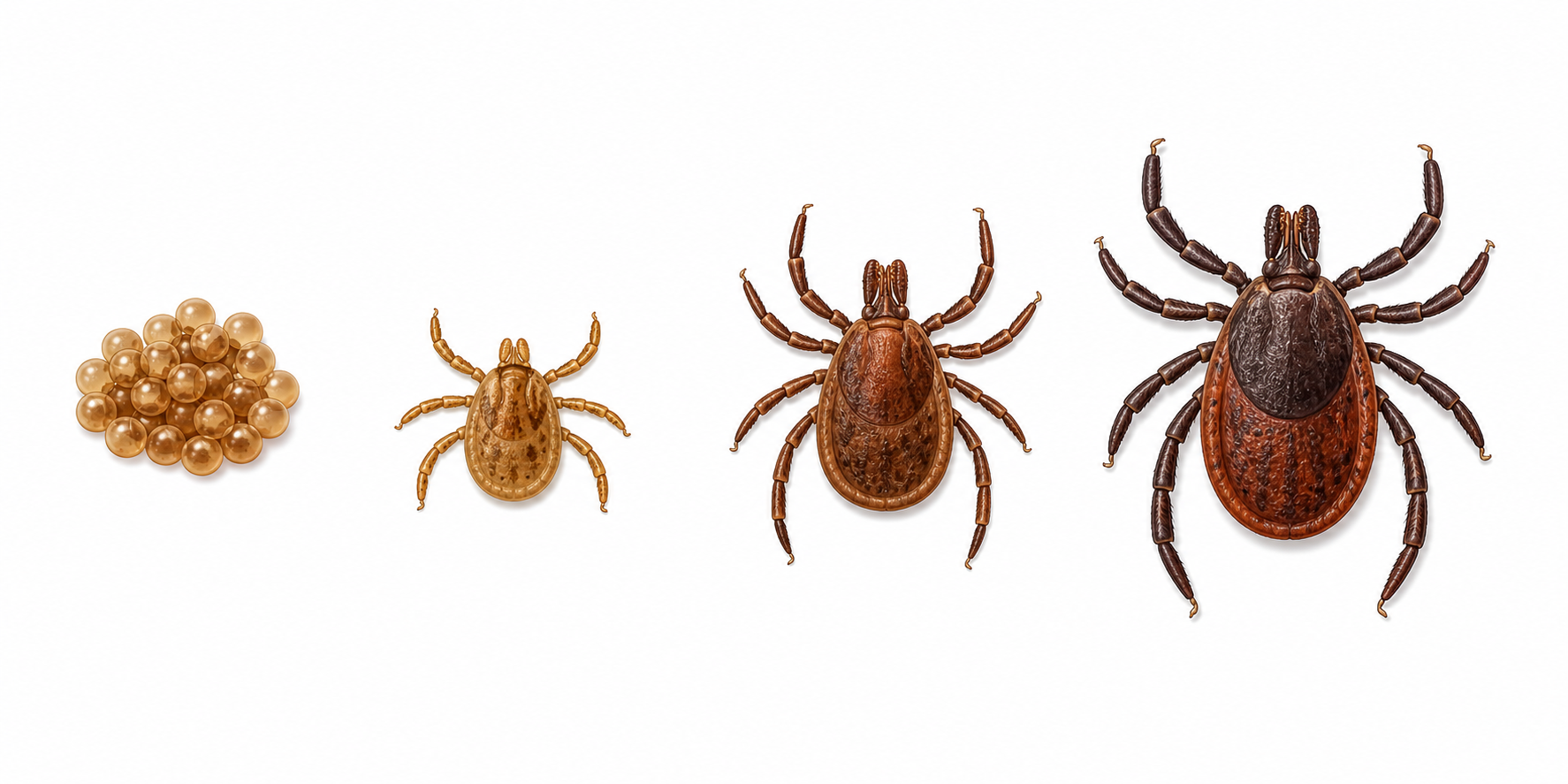
Enlarged illustration showing tick eggs, a six-legged larva, an eight-legged nymph and an eight-legged adult
The tick lifecycle. From left: eggs, six-legged larva, eight-legged nymph and eight-legged adult. The stages are enlarged and are not shown to the same scale.

We learn this habit because a few ticks can carry germs that make people or animals poorly. Grown-ups may call one of these illnesses Lyme disease. Most tick bites do not cause illness. Young children only need to remember: enjoy outdoor play, Stop, Check, Tell, and let a trusted grown-up help.

A tick is a very small living creature. It is an arachnid, like spiders and mites, and it has eight legs when it is a nymph or adult. Ticks do not fly or jump.

We can look calmly, learn what to do and keep enjoying outdoor play.

Learning check 1 of 2 · Not scoredIs this picture shown bigger than a real tick?
Learning check 2 of 2 · Not scoredCan ticks fly or jump?

Your achievement

Complete both activities to achieve module 1 of 5.