Part 1 of 2 · Learning programme

VuxLore Tick Academy® · Secondary learning

Tick Awareness in Practice

A complete Key Stage 4 programme in tick biology, One Health, proportionate risk, prevention, checks, safe response and evidence literacy.

  • Ages 14–16 · Key Stage 4 · Secondary / High School
  • 90–120 minutes · Ten required modules · Complete across sessions
  • 10 required modules

Your name stays private. We don't save or send it anywhere. It is used only on this open page and disappears when you refresh or close it.

You can use a first name or nickname, skip this step, or ask a grown-up to help.

Your learning journey

Welcome

Today you are going to learn the essential tick-awareness knowledge and practical habits covered in this programme. Work through each learning module and its short activities in order.

When you complete the learning programme, you can take the separate final assessment. Reach the required pass mark and you can create and print your VuxLore Tick Academy certificate.

Why tick awareness matters

Some ticks can transmit infections, including Lyme disease. Not every tick is infected and most tick bites do not result in illness, but awareness helps people reduce bites, find attached ticks and remove them promptly and correctly, and recognise when symptoms need appropriate health advice. The course teaches calm, proportionate action—not fear or self-diagnosis.

UKHSA tick awareness guidance · NHS Lyme disease guidance. Follow current guidance for your own country or region.

Programme outcomes

  • Explain tick anatomy, lifecycle and ecology
  • Distinguish hazard, exposure and outcome
  • Build a proportionate prevention and response plan
  • Evaluate health claims and respect clinical boundaries
  • Apply learning to repeated-exposure scenarios

Learning completion: Work through every module and use both supportive learning checks. These checks are not scored and do not contribute to the final assessment result. The separate assessment unlocks after the learning programme is complete.

Module 1 of 10 · 8–10 minutes

Recognition, anatomy and life stages
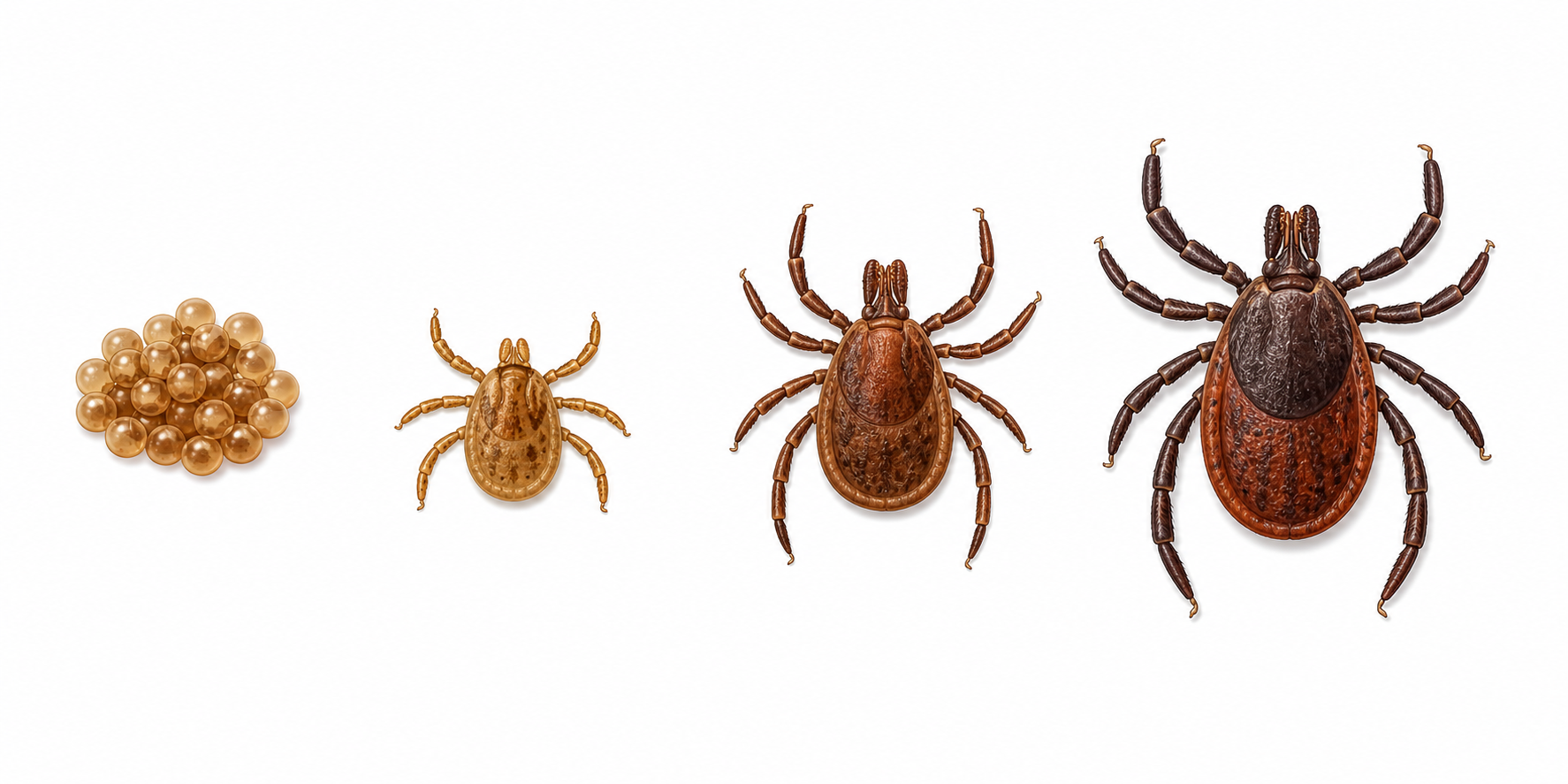
Illustrated tick lifecycle from eggs to adult
Enlarged educational illustration. Stages are not shown to a common scale; real appearance varies.

Some ticks can transmit infections, including Lyme disease. Not every tick is infected and most tick bites do not result in illness, but awareness helps people reduce bites, find attached ticks and remove them promptly and correctly, and recognise when symptoms need appropriate health advice. The course teaches calm, proportionate action—not fear or self-diagnosis.

Ticks are arachnids, not insects. The lifecycle progresses from egg to six-legged larva, eight-legged nymph and eight-legged adult. Species, stage, sex and feeding state affect size, colour and body shape, so one image cannot identify every tick.

Recognition begins with anatomy and scale, but a photograph alone cannot establish infection or diagnose illness.

Learning check 1 of 2 · Not scoredWhich statement about life stages is accurate?
Learning check 2 of 2 · Not scoredWhy can one photograph be insufficient for identification?

Your achievement

Complete both activities to achieve module 1 of 10.