Profil de l'espèce

Castor bean tick

Ixodes ricinus
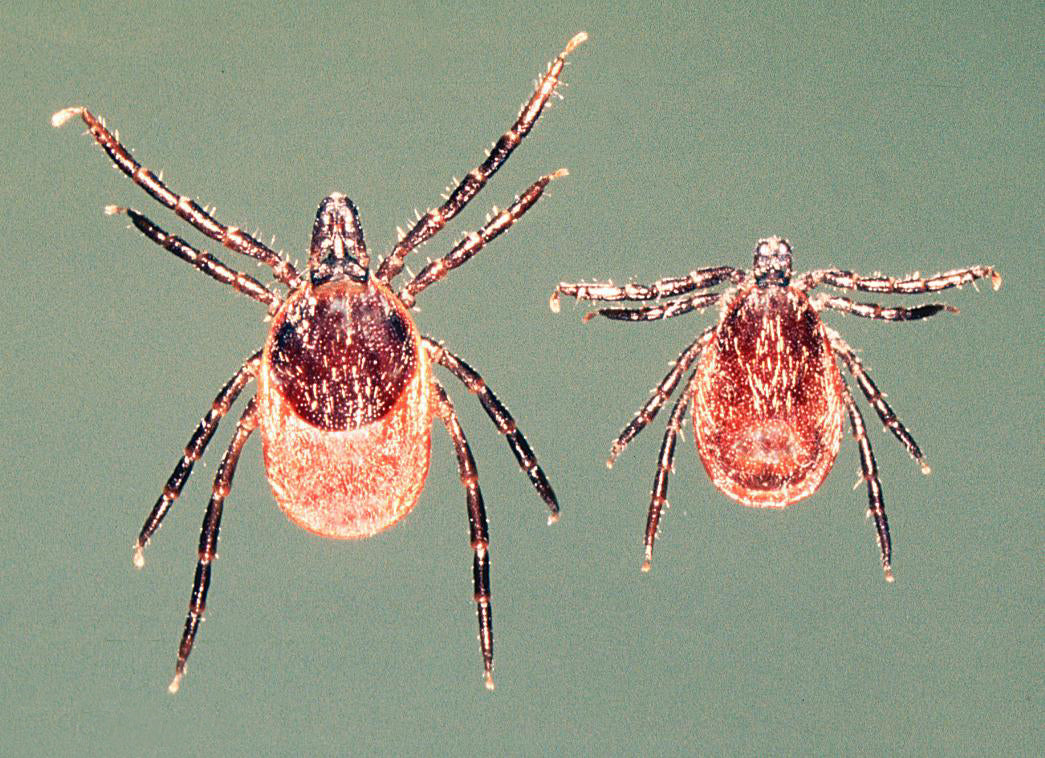
Ixodes ricinus is a widespread European hard tick that feeds on many mammals, birds and reptiles, including humans. It is the tick species of greatest concern for human health in the United Kingdom and the principal UK vector of Lyme borreliosis.

Adult female Ixodes ricinus tick on the left and smaller adult male on the right
female_and_male · Adult · unfed

Crédit image:Alan R Walker • Licensed under CC BY-SA 3.0 • Source: Wikimedia Commons Conditions de licence — S’ouvre dans une nouvelle fenêtre.Source — S’ouvre dans une nouvelle fenêtre.
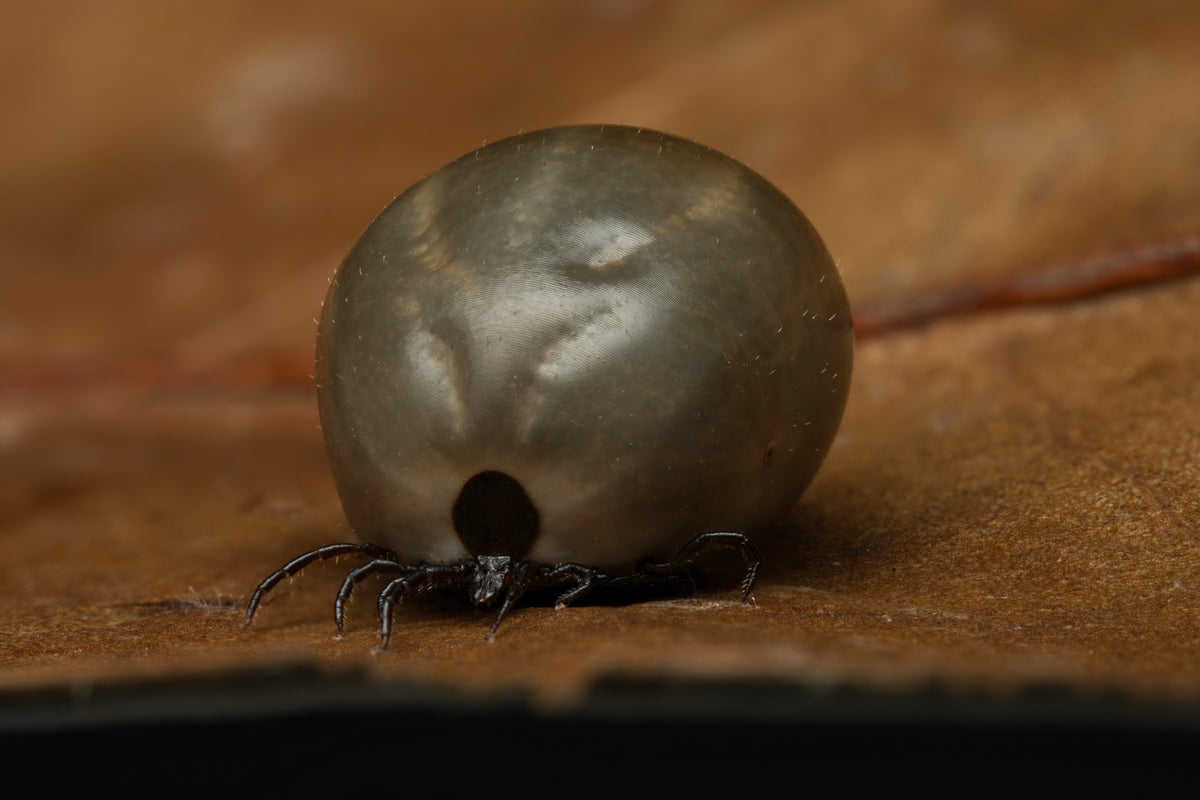
Engorged adult female Ixodes ricinus castor bean tick after a blood meal
female · Adult · engorged

Crédit image:MicrocosmicWorld / Wikimedia Commons Conditions de licence — S’ouvre dans une nouvelle fenêtre.Changements: Resized proportionally from 7166 × 4778 px to 5338 × 3559 px for Shopify compatibility; no crop or content alteration.Source — S’ouvre dans une nouvelle fenêtre.

Également connu sous le nom de: Sheep tick, Deer tick

Galerie d'images

Faits rapides

Family: Ixodidae. Genus: Ixodes. Hard tick. Recorded life stages: egg, larva, nymph and adult.

Identification

Larvae have six legs; nymphs and adults have eight. Adult females have a dorsal scutum covering only the anterior body, while the adult male scutum covers almost the entire dorsal surface. Microscopic characters may be required.

Ixodes genus characters and species-level morphology may require microscopic examination. Engorgement can obscure useful characters.

May be confused with Ixodes hexagonus and Ixodes persulcatus. Host, colour or photograph alone is not sufficient for reliable confirmation.

A photograph alone cannot always confirm Ixodes ricinus. Where species confirmation matters, use an authoritative key and appropriate expert examination.

Différences sexuelles et d'apparence

Adult females have a scutum covering only the anterior dorsal surface, allowing substantial expansion during feeding. Adult males are smaller and the scutum covers almost the whole dorsal surface. Larvae have three pairs of legs; nymphs and adults have four pairs.

Cycle de vie

A three-host life cycle is typical. Larvae, nymphs and adult females require a blood meal, and each parasitic stage normally feeds on a separate host. Duration is often approximately three years but varies with climate and host availability.

Étapes de la vie

  • Egg
  • Larva
  • Nymph
  • Adult

Activité saisonnière

Potentially active throughout the year. UK nymph activity is greatest in spring and commonly peaks between April and June. Phenology varies geographically and between years and may include spring and autumn peaks.

Hôtes

  • Humans (Homo sapiens)
  • Deer
  • Cattle (Bos taurus)
  • Small mammals
  • Birds
  • Reptiles

Habitats

  • Woodland
  • Grassland and rough pasture
  • Parks and wildlife-accessible gardens

Répartition

Established and widespread in the United Kingdom. Presence records, establishment, habitat suitability and disease risk must be interpreted separately.

La présence, les populations établies, la qualité de l'habitat et le risque de maladie sont des catégories de preuves distinctes.

Pays et régions

  • United Kingdom — present

    Included in the UKHSA tick species profiles for the United Kingdom.

  • Europe — present

    ECDC publishes confirmed European distribution data for this species.

  • England — present

    UKHSA surveillance maps and records identify Ixodes ricinus across England.

  • Scotland — present

    UKHSA surveillance maps and records identify Ixodes ricinus across Scotland.

  • Wales — present

    UKHSA surveillance maps and records identify Ixodes ricinus across Wales.

  • Northern Ireland — present

    UK-wide surveillance describes Ixodes ricinus as widespread across the UK, while official Northern Ireland guidance confirms exposure to Lyme-carrying ticks within the UK and Ireland.

Pertinence médicale et vétérinaire

Frequently bites humans. It is the principal UK vector of Lyme borreliosis. Pathogen detection, vector competence and local disease risk are distinct evidence categories.

Feeds on livestock, companion animals and wildlife and is associated with pathogens of veterinary importance.

Pathogènes et maladies

  • Lyme borreliosis — disease

    Ixodes ricinus is the principal UK vector of Borrelia burgdorferi sensu lato. Vector status and individual infection risk are separate questions.

  • Tick-borne encephalitis — disease

    Ixodes ricinus is a recognised vector of tick-borne encephalitis virus in relevant endemic settings; presence of the tick does not itself establish local disease risk.

  • Anaplasmosis and tick-borne fever — disease

    Association and vector relevance depend on pathogen strain, host and geography.

  • Babesiosis — disease

    Species, host and geographic context are required when describing Babesia associations.

  • Louping ill — disease

    A veterinary and wildlife disease association reported for Ixodes ricinus.

  • Rickettsia helvetica (Rickettsia helvetica) — pathogen

    Detection and transmission evidence must not be presented as proof of local clinical disease risk.

La détection d'un agent pathogène chez une tique n'établit pas en soi que l'espèce est un vecteur confirmé.

Preuves vectorielles et pathogènes

Confirmed principal UK vector of Borrelia burgdorferi sensu lato. It is also a recognised vector or reported vector-associated species for other pathogens, but each association must retain its source-specific evidence category. Detection alone does not prove vector competence or local transmission.

Importance médicale

Frequently bites humans. Small nymphs are important in exposure because they may be overlooked. This profile describes evidence and does not diagnose infection or predict an individual’s risk.

Importance vétérinaire

Feeds on livestock, companion animals and wildlife and has substantial veterinary relevance. Pathogen, host and geographic context must be stated for individual disease claims.

Conseils pour la prévention et l'élimination

Use appropriate clothing and repellents where suitable, remain on clear paths where practical, and check people, clothing and animals after exposure to tick habitat. Follow current public-health and veterinary guidance.

Remove an attached tick promptly with fine-tipped tweezers or a purpose-designed tick-removal tool. Grasp close to the skin and pull upward slowly and firmly without crushing the tick. Seek appropriate professional advice if concerning symptoms develop.

Informations importantes d'identification et de santé

Informations pédagogiques et limitations

Les photographies et les caractéristiques visibles peuvent ne pas suffire pour une identification définitive.

Ces informations pédagogiques ne constituent pas un diagnostic et ne remplacent en aucun cas un avis médical ou vétérinaire.

Ces informations pédagogiques ne remplacent en aucun cas un examen ou les conseils d'un professionnel vétérinaire qualifié.

La présence, les populations établies, la qualité de l'habitat et le risque de maladie sont des catégories de preuves distinctes.