
Profil de l'espèce
Pacific Coast tick
Dermacentor occidentalis
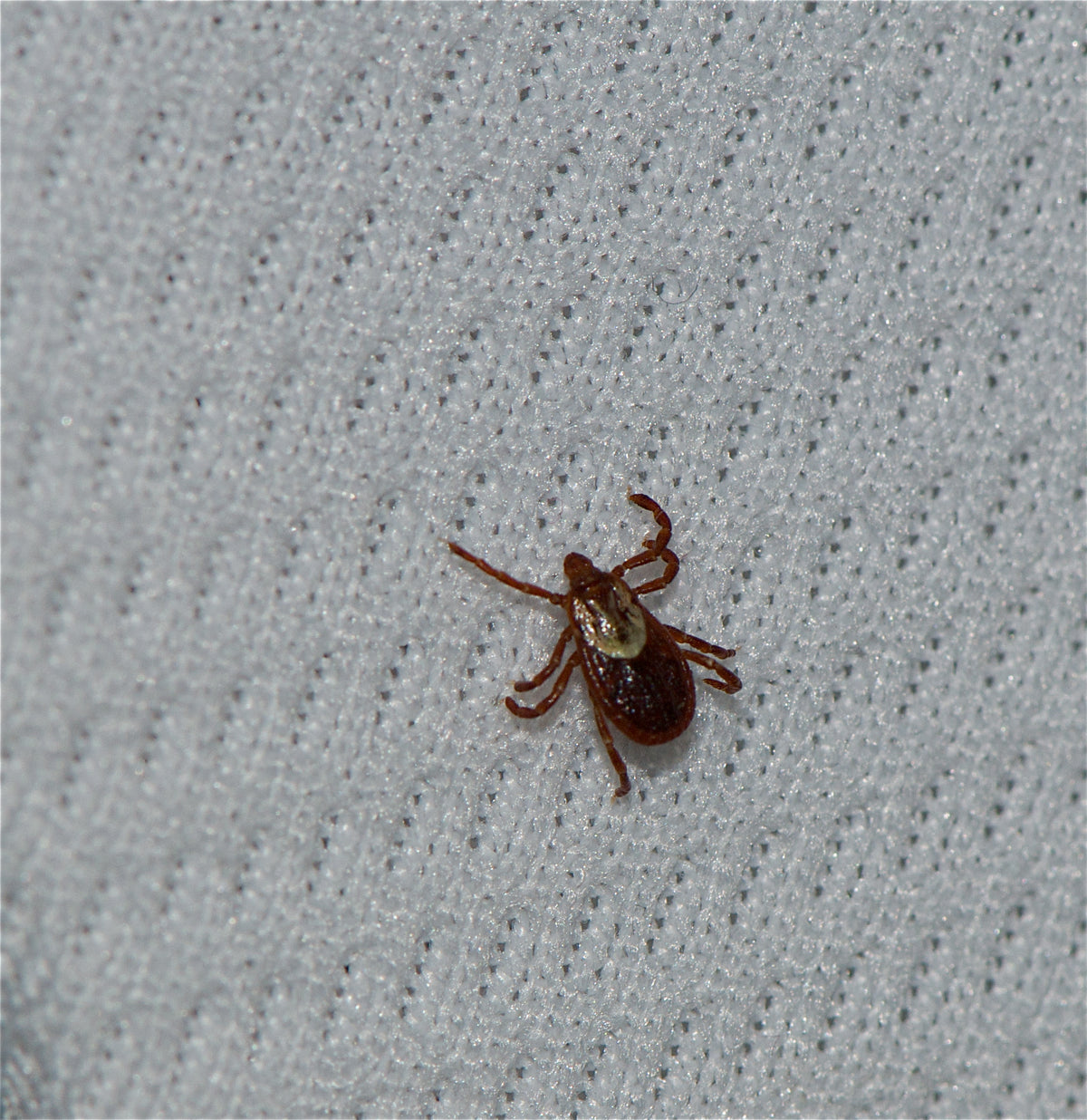
Crédit image:jkirkhart35 / Wikimedia Commons; originally Flickr Conditions de licence — S’ouvre dans une nouvelle fenêtre.Source — S’ouvre dans une nouvelle fenêtre.
Galerie d'images
Crédit image:jkirkhart35 / Wikimedia Commons; originally Flickr Conditions de licence — S’ouvre dans une nouvelle fenêtre.Source — S’ouvre dans une nouvelle fenêtre.
Faits rapides
Identification
Différences sexuelles et d'apparence
Cycle de vie
Étapes de la vie
- Egg
- Larva
- Nymph
- Adult
Activité saisonnière
Hôtes
- Humans (Homo sapiens)
- Horses
- Cattle (Bos taurus)
- Deer
- Rodents
- Rabbits
Habitats
- Pacific coastal scrub and woodland
- Woodland edges and trails
Répartition
La présence, les populations établies, la qualité de l'habitat et le risque de maladie sont des catégories de preuves distinctes.
Pays et régions
- United States — established_regional
Pertinence médicale et vétérinaire
Pathogènes et maladies
- Pacific Coast tick fever — disease
La détection d'un agent pathogène chez une tique n'établit pas en soi que l'espèce est un vecteur confirmé.
Preuves vectorielles et pathogènes
Importance médicale
Importance vétérinaire
Conseils pour la prévention et l'élimination
Informations importantes d'identification et de santé
Informations pédagogiques et limitations
Les photographies et les caractéristiques visibles peuvent ne pas suffire pour une identification définitive.
Ces informations pédagogiques ne constituent pas un diagnostic et ne remplacent en aucun cas un avis médical ou vétérinaire.
Ces informations pédagogiques ne remplacent en aucun cas un examen ou les conseils d'un professionnel vétérinaire qualifié.
La présence, les populations établies, la qualité de l'habitat et le risque de maladie sont des catégories de preuves distinctes.