Species profile

Hyalomma marginatum

A large, active host-seeking hard tick established in warmer parts of southern Europe, northern Africa and parts of Asia. It is regularly introduced into the UK on migratory birds, but UKHSA reports no evidence of an established UK population.

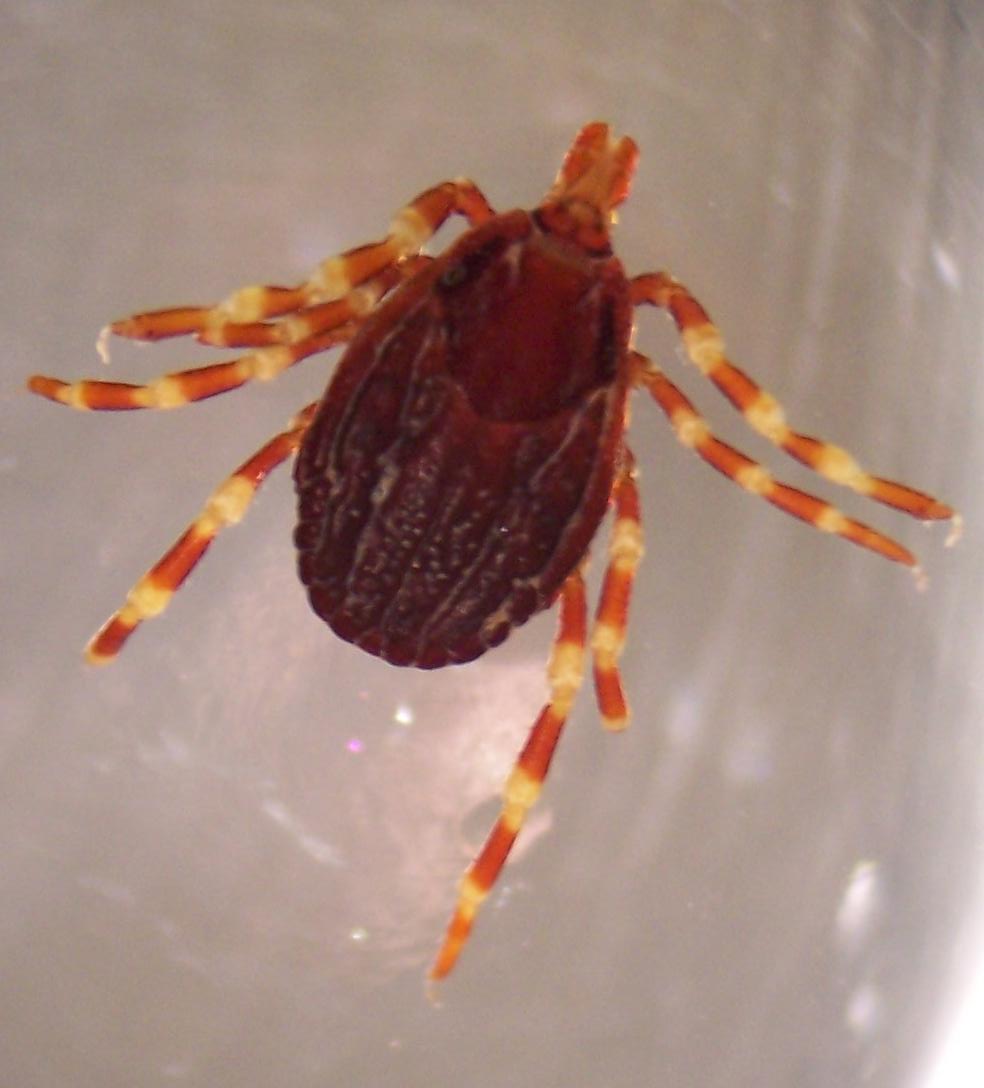
Preserved adult Hyalomma marginatum specimen photographed through a dissecting microscope
Adult preserved specimen

Image credit:Adam Cuerden; public domain Licence terms — Abrirá numa nova janela.Source — Abrirá numa nova janela.

Image gallery

Quick facts

Family: Ixodidae. Genus: Hyalomma. Tick type: hard tick.

Taxonomic authority: Koch, 1844.

Recorded life-cycle stages: egg, larva, nymph, adult.

Identification

Adults have conspicuously banded legs and long legs adapted for active host seeking.

Hyalomma marginatum belongs to a difficult species complex. Immature Hyalomma should not be assigned to species from photographs alone.

Adults have conspicuously banded legs and long legs adapted for active host seeking.

Hyalomma marginatum belongs to a difficult species complex. Immature Hyalomma should not be assigned to species from photographs alone.

Photographs alone cannot always confirm a tick species.

Distribution

Immatures enter the UK on migratory birds and some adults have been detected after local moulting. Detection and climatic suitability are not evidence of establishment.

Established across parts of southern Europe, northern Africa and Asia.

Presence, established populations, habitat suitability and disease risk are distinct evidence categories.

Countries and regions

  • Europe — present

    ECDC publishes confirmed European distribution data for this species.

Medical and veterinary relevance

A locally acquired adult was reported from a person in England; this isolated exposure does not demonstrate UK establishment.

Human-biting evidence status: confirmed human exposure.

Crimean-Congo haemorrhagic fever virus (Crimean-Congo haemorrhagic fever): main vector in europe. Scope: established range; not a claim of UK transmission.

Rickettsia aeschlimannii: detected in imported or locally moulted uk hyalomma; detection does not establish local transmission.

Veterinary relevance status: high in established range.

Vector and pathogen evidence

Crimean-Congo haemorrhagic fever virus

Crimean-Congo haemorrhagic fever

main_vector_in_europe

established range; not a claim of UK transmission

Rickettsia aeschlimannii

detected_in_imported_or_locally_moulted_uk_hyalomma; detection_does_not_establish_local_transmission

Medical importance

confirmed_human_exposure

A locally acquired adult was reported from a person in England; this isolated exposure does not demonstrate UK establishment.

Crimean-Congo haemorrhagic fever virus

Crimean-Congo haemorrhagic fever

main_vector_in_europe

established range; not a claim of UK transmission

Rickettsia aeschlimannii

detected_in_imported_or_locally_moulted_uk_hyalomma; detection_does_not_establish_local_transmission

Veterinary importance

high_in_established_range

Crimean-Congo haemorrhagic fever virus

Crimean-Congo haemorrhagic fever

main_vector_in_europe

established range; not a claim of UK transmission

Rickettsia aeschlimannii

detected_in_imported_or_locally_moulted_uk_hyalomma; detection_does_not_establish_local_transmission

Important identification and health information

Educational information and limitations

Photographs and visible features may be insufficient for definitive identification.

This educational information is not a diagnosis or a substitute for medical or veterinary advice.

This educational information does not replace examination or advice from a qualified veterinary professional.

Presence, established populations, habitat suitability and disease risk are distinct evidence categories.