
VuxLore news
Recording a Tick Encounter: Location, Date and Identification Clues
Recording when and where a tick was encountered can provide useful context for identification, surveillance and professional discussions.
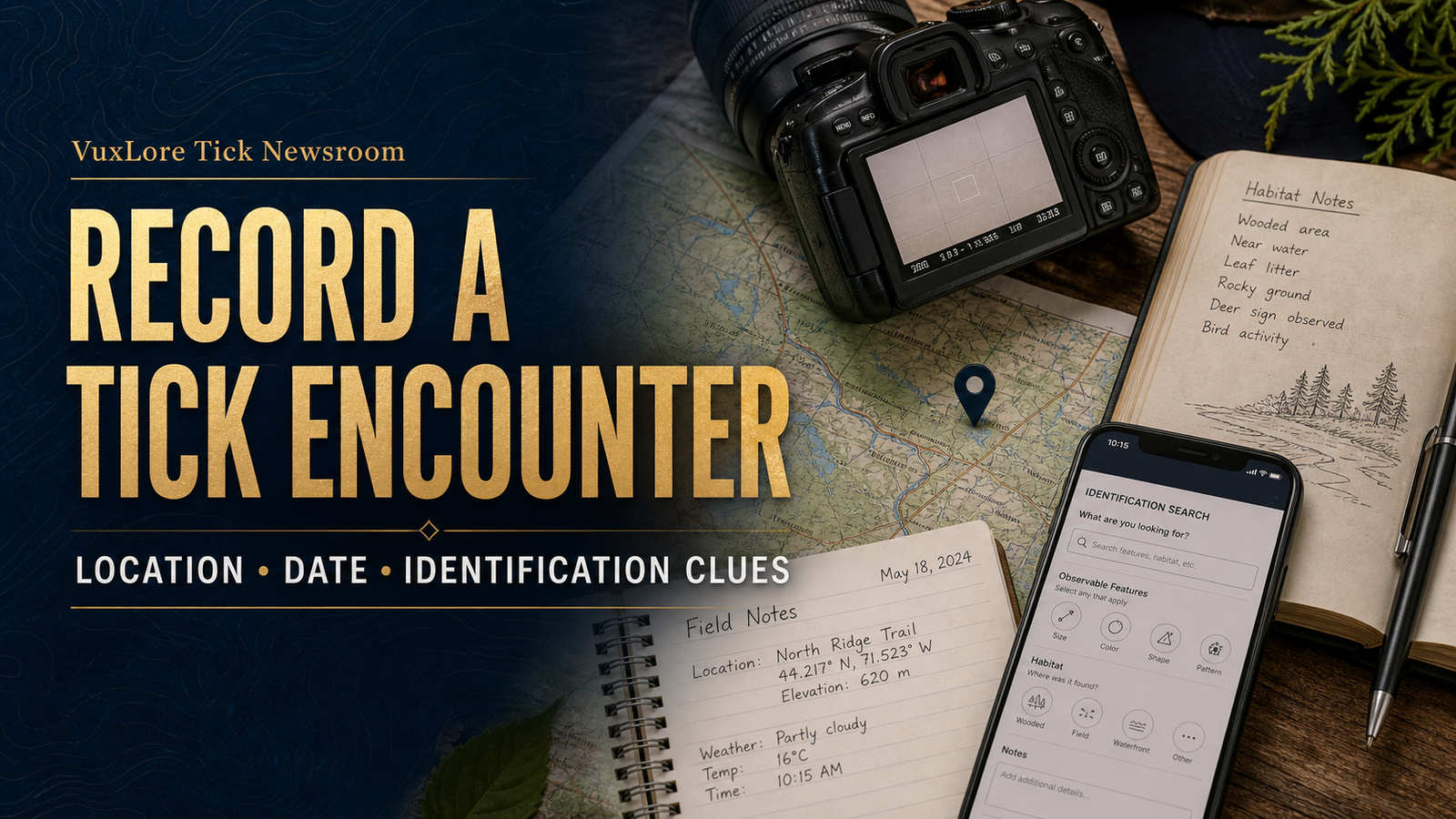
A simple record can preserve useful context after a tick encounter. Note the date, location, habitat or activity, likely host and whether the tick was crawling or attached.
Photography and identification
If it is safe and appropriate, clear photographs from more than one angle can support later comparison. Identification from an image is not always certain, especially for small or damaged specimens. Use the Tick ID Centre as an educational starting point and the Global Tick Hub for regional context.
Official surveillance
In the UK, specimens may be eligible for the UKHSA Tick Surveillance Scheme. Surveillance is separate from medical diagnosis; seek healthcare or veterinary advice when needed.