Species profile

Ornate cow tick

Dermacentor reticulatus
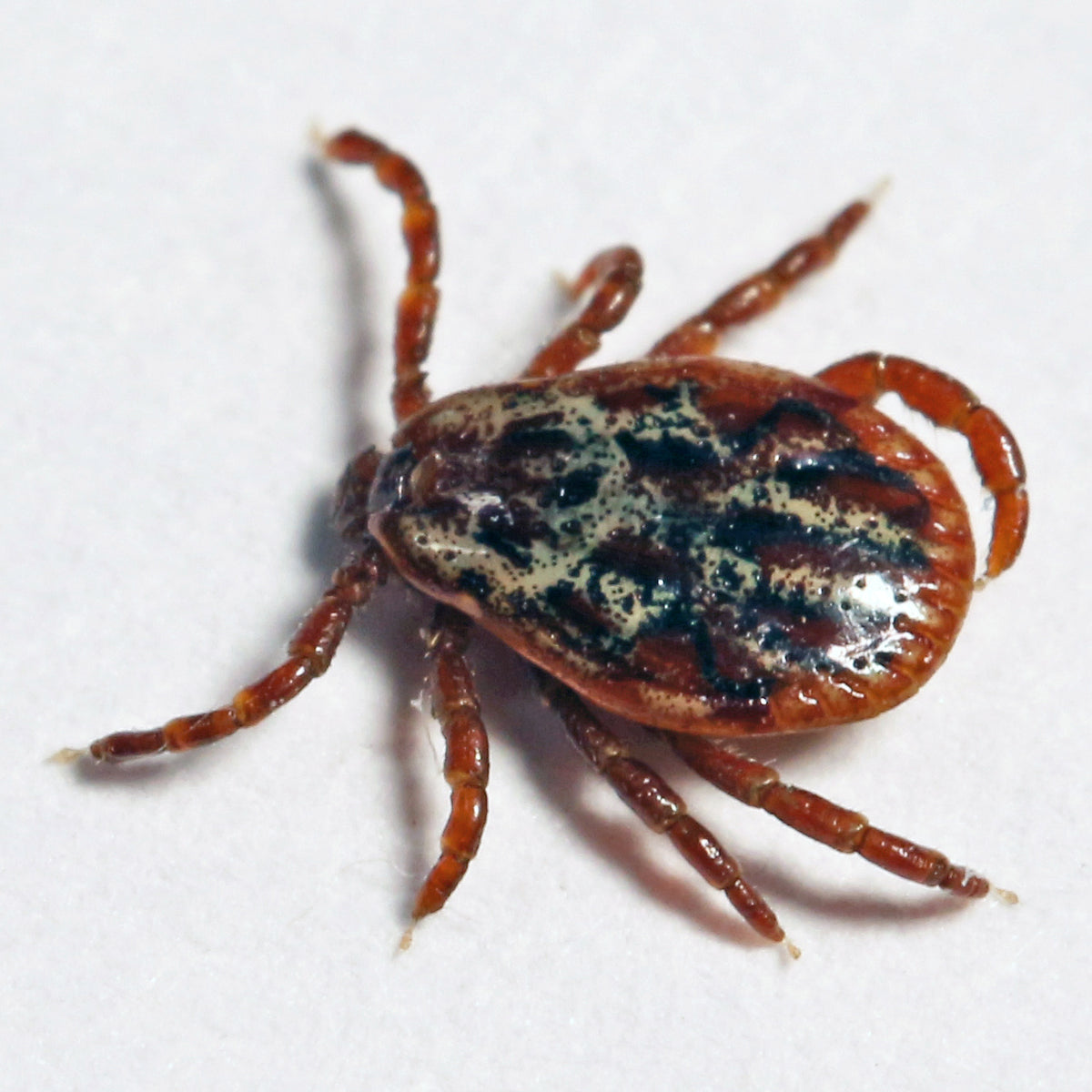
An ornate hard tick established in restricted parts of the UK and widely distributed in western Europe. It has major veterinary relevance because it can transmit Babesia canis to dogs.

Macro photograph of an adult male Dermacentor reticulatus ornate cow tick
Adult male, macro view

Image credit:Christian Fischer / Wikimedia Commons Licence terms — Otwiera się w nowym oknie.Source — Otwiera się w nowym oknie.

Image gallery

Quick facts

Family: Ixodidae. Genus: Dermacentor. Tick type: hard tick.

Taxonomic authority: (Fabricius, 1794).

Recorded life-cycle stages: egg, larva, nymph, adult.

Identification

Ornamented scutum or conscutum.

Eyes and festoons present.

Coxa I has large paired spurs.

Adult males have enlarged coxa IV.

The ornate pattern is helpful but does not replace examination of diagnostic characters.

Ornamented scutum or conscutum.

Eyes and festoons present.

Coxa I has large paired spurs.

Adult males have enlarged coxa IV.

Article III of the palps has a prominent rear-facing spur in the ESCCAP key.

The ornate pattern is helpful but does not replace examination of diagnostic characters.

Photographs alone cannot always confirm a tick species.

Life cycle

three_host

Distribution

Mostly restricted to Wales and south-west England, with establishment reported in Essex.

Presence, established populations, habitat suitability and disease risk are distinct evidence categories.

Countries and regions

  • United Kingdom — present

    Included in the UKHSA tick species profiles for the United Kingdom.

  • Europe — present

    ECDC publishes confirmed European distribution data for this species.

Medical and veterinary relevance

Human-biting evidence status: occasional human biter.

Babesia canis (Canine babesiosis): confirmed vector.

undefined: detected in uk ticks; human disease not reported in UK in cited review.

Rickettsia raoultii: detected in uk ticks; detection does not alone establish local clinical disease risk.

Confirmed vector relevance for canine babesiosis; the species was implicated in autochthonous canine babesiosis in the UK.

Veterinary relevance status: high.

Vector and pathogen evidence

Babesia canis

Canine babesiosis

confirmed_vector

Rickettsia species

detected_in_uk_ticks; human disease not reported in UK in cited review

Rickettsia raoultii

detected_in_uk_ticks; detection does not alone establish local clinical disease risk

Medical importance

occasional_human_biter

Babesia canis

Canine babesiosis

confirmed_vector

Rickettsia species

detected_in_uk_ticks; human disease not reported in UK in cited review

Rickettsia raoultii

detected_in_uk_ticks; detection does not alone establish local clinical disease risk

Veterinary importance

high

Confirmed vector relevance for canine babesiosis; the species was implicated in autochthonous canine babesiosis in the UK.

Babesia canis

Canine babesiosis

confirmed_vector

Rickettsia species

detected_in_uk_ticks; human disease not reported in UK in cited review

Rickettsia raoultii

detected_in_uk_ticks; detection does not alone establish local clinical disease risk

Important identification and health information

Educational information and limitations

Photographs and visible features may be insufficient for definitive identification.

This educational information is not a diagnosis or a substitute for medical or veterinary advice.

This educational information does not replace examination or advice from a qualified veterinary professional.

Presence, established populations, habitat suitability and disease risk are distinct evidence categories.