
← Back to Tick Bite Images for People
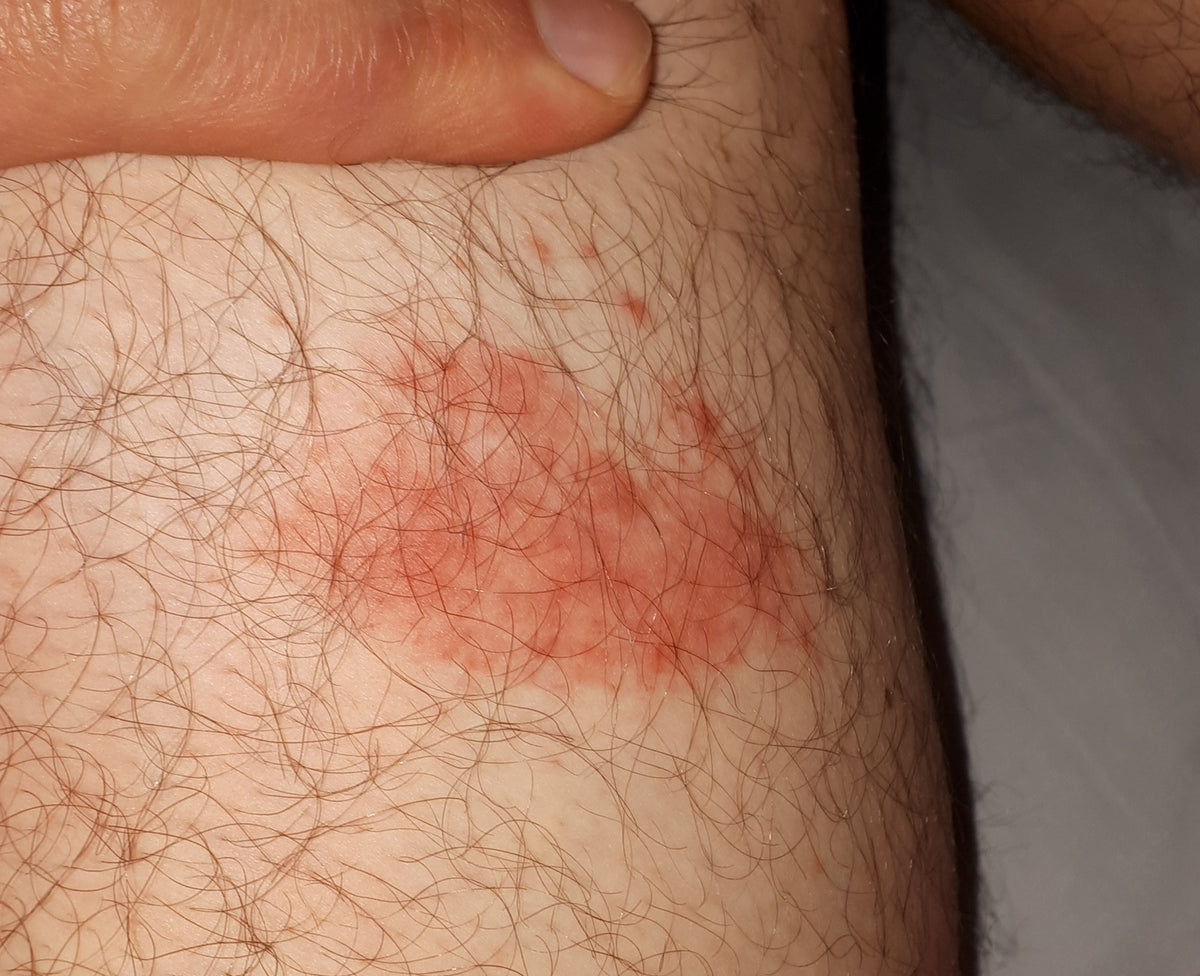
Image of an early atypical Lyme rash: what does it show?
This photograph documents erythema migrans before it developed the familiar target-like appearance.
Reviewed by VuxLore® Knowledge Team For People
Short answer
At a glance
Key takeaways
What does this Lyme rash image show?
This photograph records erythema migrans on a thigh about one week after its initial presentation. It did not yet show a classic target-shaped pattern.
Why is this useful?
People should not wait for a perfect bullseye. Erythema migrans can be uniformly red, oval or irregular and may expand gradually. Appearance alone cannot diagnose Lyme disease.
When should you seek advice?
Seek appropriate medical advice if a rash expands after possible tick exposure or if concerning symptoms develop.
Sources and further reading
UK Lyme disease guidance and data
For current UK clinical advice, public-health guidance and surveillance data, consult these primary national sources.