
Species profile
Rabbit tick
Ixodes ventalloi
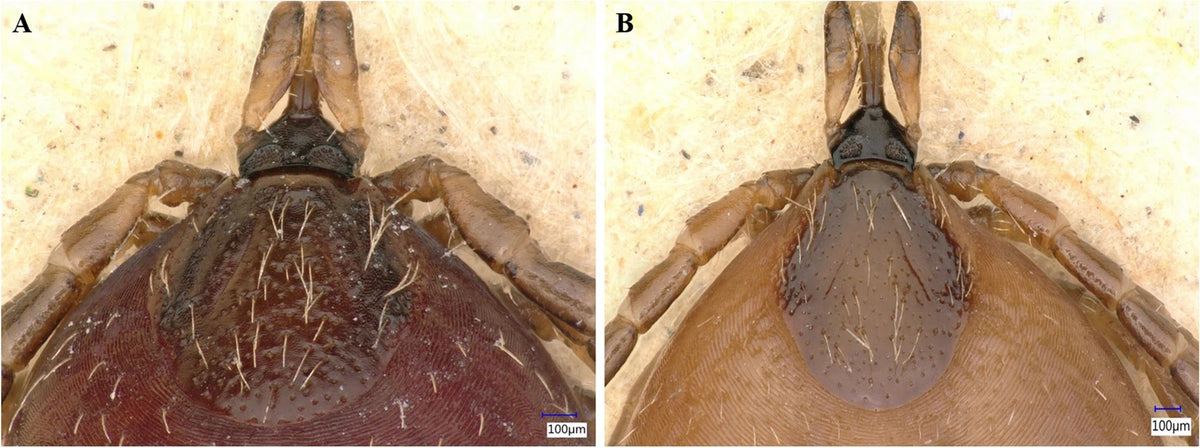
Image credit:Peňazziová, K. L. et al. (2024), Figure 2; Parasitology Research / Springer Nature; CC BY 4.0 Licence terms — Wird in einem neuen Fenster geöffnet.Changes: Converted from WEBP to JPEG for Shopify compatibility at 1769 × 660 px; no crop or content alteration.Source — Wird in einem neuen Fenster geöffnet.
Image gallery
Image credit:Peňazziová, K. L. et al. (2024), Figure 2; Parasitology Research / Springer Nature; CC BY 4.0 Licence terms — Wird in einem neuen Fenster geöffnet.Changes: Converted from WEBP to JPEG for Shopify compatibility at 1769 × 660 px; no crop or content alteration.Source — Wird in einem neuen Fenster geöffnet.
Quick facts
Identification
Distribution
Presence, established populations, habitat suitability and disease risk are distinct evidence categories.
Countries and regions
- United Kingdom — present
Medical and veterinary relevance
Medical importance
Veterinary importance
Important identification and health information
Educational information and limitations
Photographs and visible features may be insufficient for definitive identification.
This educational information is not a diagnosis or a substitute for medical or veterinary advice.
This educational information does not replace examination or advice from a qualified veterinary professional.
Presence, established populations, habitat suitability and disease risk are distinct evidence categories.