
Species profile
Blacklegged tick
Ixodes scapularis
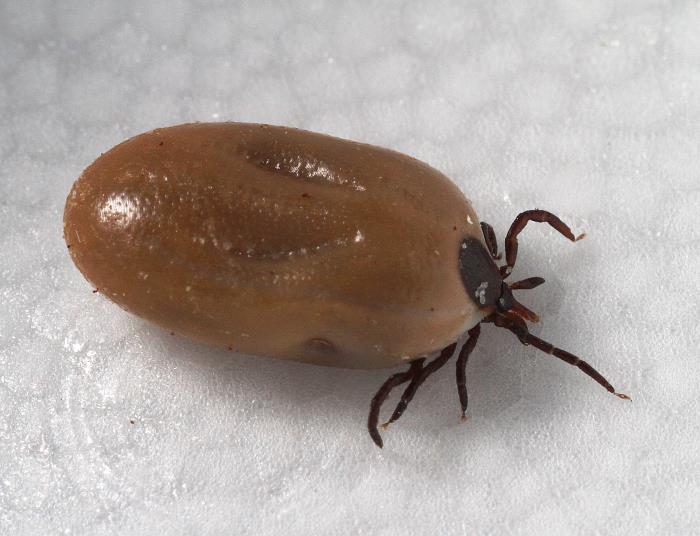
Image credit:Centers for Disease Control and Prevention Licence terms — Wird in einem neuen Fenster geöffnet.Source — Wird in einem neuen Fenster geöffnet.
Also known as: Deer tick, Bear tick
Image gallery
Image credit:Centers for Disease Control and Prevention Licence terms — Wird in einem neuen Fenster geöffnet.Source — Wird in einem neuen Fenster geöffnet.
Quick facts
Identification
Sex and appearance differences
Life cycle
Life stages
- Egg
- Larva
- Nymph
- Adult
Seasonal activity
Hosts
- Humans (Homo sapiens)
- White-tailed deer (Odocoileus virginianus)
- Small mammals
- Birds
- Lizards
Habitats
- Woodland
- Woodland edges and trails
Distribution
Presence, established populations, habitat suitability and disease risk are distinct evidence categories.
Countries and regions
- United States — established_widespread
- Connecticut — present
- Delaware — present
- Florida — present
- Georgia — present
- Illinois — present
- Indiana — present
- Kansas — present
- Kentucky — present
- Louisiana — present
- Maine — present
- Maryland — present
- Massachusetts — present
- Michigan — present
- Minnesota — present
- Mississippi — present
- Missouri — present
- New Hampshire — present
- New York — present
- North Carolina — present
- Ohio — present
- Oklahoma — present
- Pennsylvania — present
- Rhode Island — present
- South Carolina — present
- South Dakota — present
- Tennessee — present
- Vermont — present
- Virginia — present
- West Virginia — present
- Wisconsin — present
- Canada — present
- Alberta — rare
- Manitoba — present
- New Brunswick — present
- Newfoundland and Labrador — rare
- Nova Scotia — present
- Ontario — present
- Prince Edward Island — present
- Quebec — present
- Saskatchewan — rare
Medical and veterinary relevance
Pathogens and diseases
- Lyme borreliosis — disease
- Anaplasmosis and tick-borne fever — disease
- Babesiosis — disease
- Powassan virus disease — disease
- Hard tick relapsing fever — disease
Detection of a pathogen in a tick does not by itself establish that the species is a confirmed vector.
Vector and pathogen evidence
Medical importance
Veterinary importance
Prevention and removal guidance
Important identification and health information
Educational information and limitations
Photographs and visible features may be insufficient for definitive identification.
This educational information is not a diagnosis or a substitute for medical or veterinary advice.
This educational information does not replace examination or advice from a qualified veterinary professional.
Presence, established populations, habitat suitability and disease risk are distinct evidence categories.