Species profile

Amblyomma arawakan

An extinct hard tick known from Miocene Dominican amber, described from an almost fully engorged female and a partly engorged larva.

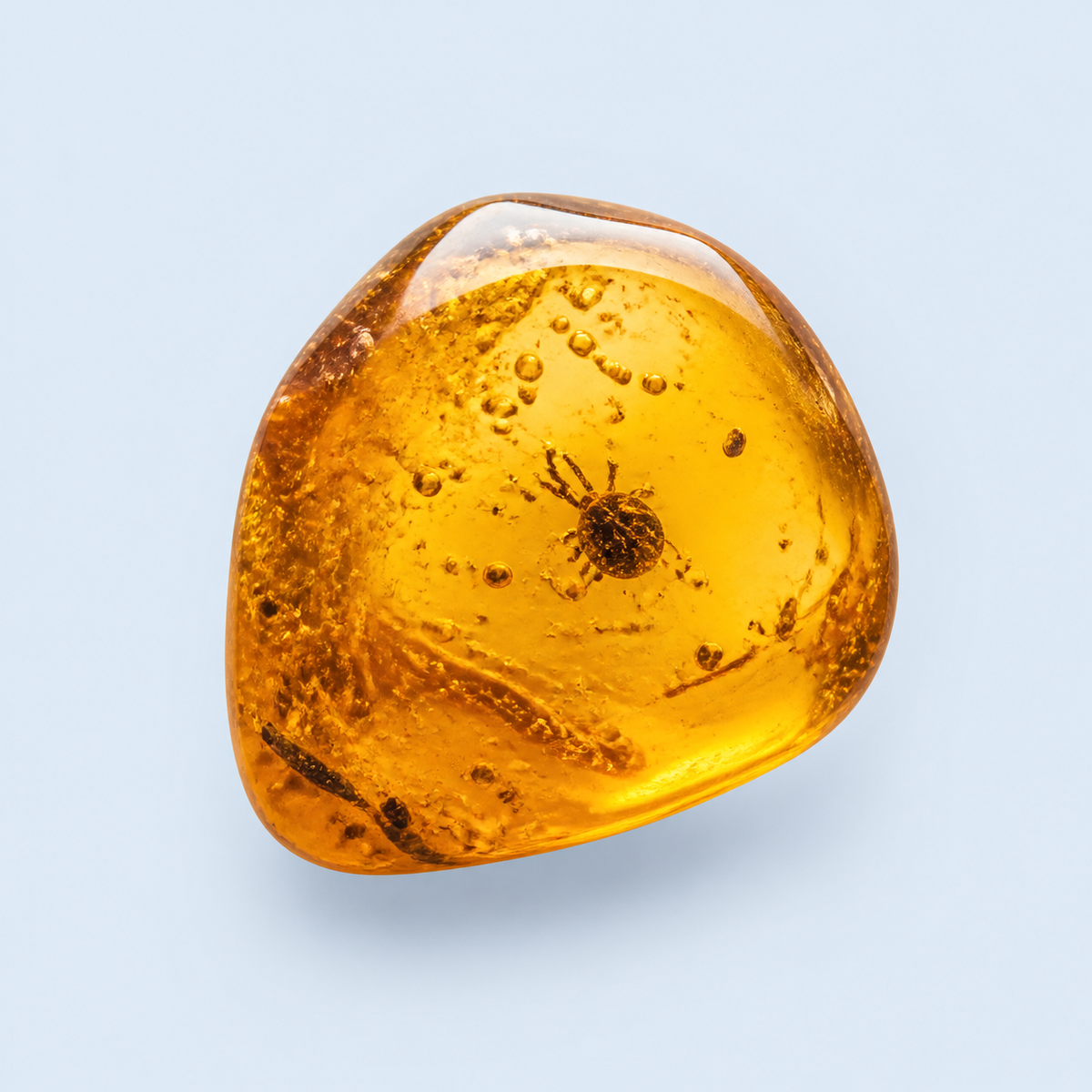
Simplified AI-generated educational illustration of amber containing a generic fossil tick-like inclusion; not a diagnostic image of Amblyomma arawakan
Simplified AI-generated educational fossil placeholder. Not the type specimen, not a diagnostic plate and not a scientifically verified reconstruction of Amblyomma arawakan.

Image credit:VuxLore simplified educational illustration; AI-generated; not diagnostic Licence terms — Åbnes i et nyt vindue.Changes: No post-generation anatomical alterations; used only as a generic fossil placeholderSource — Åbnes i et nyt vindue.

Image gallery

Quick facts

Extinct species known only from Dominican amber.

The amber is Miocene in age, probably Burdigalian, approximately 16 million years old.

Type material includes an almost fully engorged female and a partly engorged larva.

The species was studied using light microscopy, high-resolution micro-CT and three-dimensional modelling.

It was interpreted as most closely related to the living species Amblyomma auricularium.

Identification

Identification is based on fossil morphology documented through microscopy, micro-CT scanning and three-dimensional models. It is not identifiable using ordinary visitor photographs and has no living population.

The original description assigns the fossils to Amblyomma using detailed morphology documented by light microscopy, high-resolution micro-CT and three-dimensional modelling. Diagnostic interpretation should follow the original taxonomic publication.

The authors report that the fossil species appears most closely related to the living New World tick Amblyomma auricularium. Species-level distinctions are specialist fossil characters and are not suitable for photographic self-identification.

This is an extinct fossil species. The displayed fossil image is a simplified AI-generated educational placeholder, not the type specimen, a diagnostic plate or a reconstruction suitable for identification.

Sex and appearance differences

The described material comprises an almost fully engorged adult female and a partly engorged larva preserved in Dominican amber.

Life cycle

Only larval and adult female material is documented in the accepted species description. A complete life cycle cannot be reconstructed from the available fossils.

Life stages

  • Larva
  • Adult

Seasonal activity

Not applicable to an extinct fossil species.

Distribution

Known from Dominican Republic amber dating to the Miocene, probably about 16 million years ago. This is a fossil occurrence and must not be presented as present-day distribution or habitat suitability.

Presence, established populations, habitat suitability and disease risk are distinct evidence categories.

Medical and veterinary relevance

This extinct fossil species has no present-day human-biting or disease risk.

This extinct fossil species has no present-day veterinary relevance.

Vector and pathogen evidence

No present-day vector role is possible because the species is extinct. Fossil preservation does not establish pathogen transmission.

Medical importance

No present-day medical relevance; this record is included for taxonomy, evolution and education.

Veterinary importance

No present-day veterinary relevance; possible ancient hosts remain a palaeobiological question rather than a modern host association.

Prevention and removal guidance

Not applicable to an extinct fossil species.

Not applicable to an extinct fossil species.

Important identification and health information

Educational information and limitations

Photographs and visible features may be insufficient for definitive identification.

This educational information is not a diagnosis or a substitute for medical or veterinary advice.

This educational information does not replace examination or advice from a qualified veterinary professional.

Presence, established populations, habitat suitability and disease risk are distinct evidence categories.